
 English


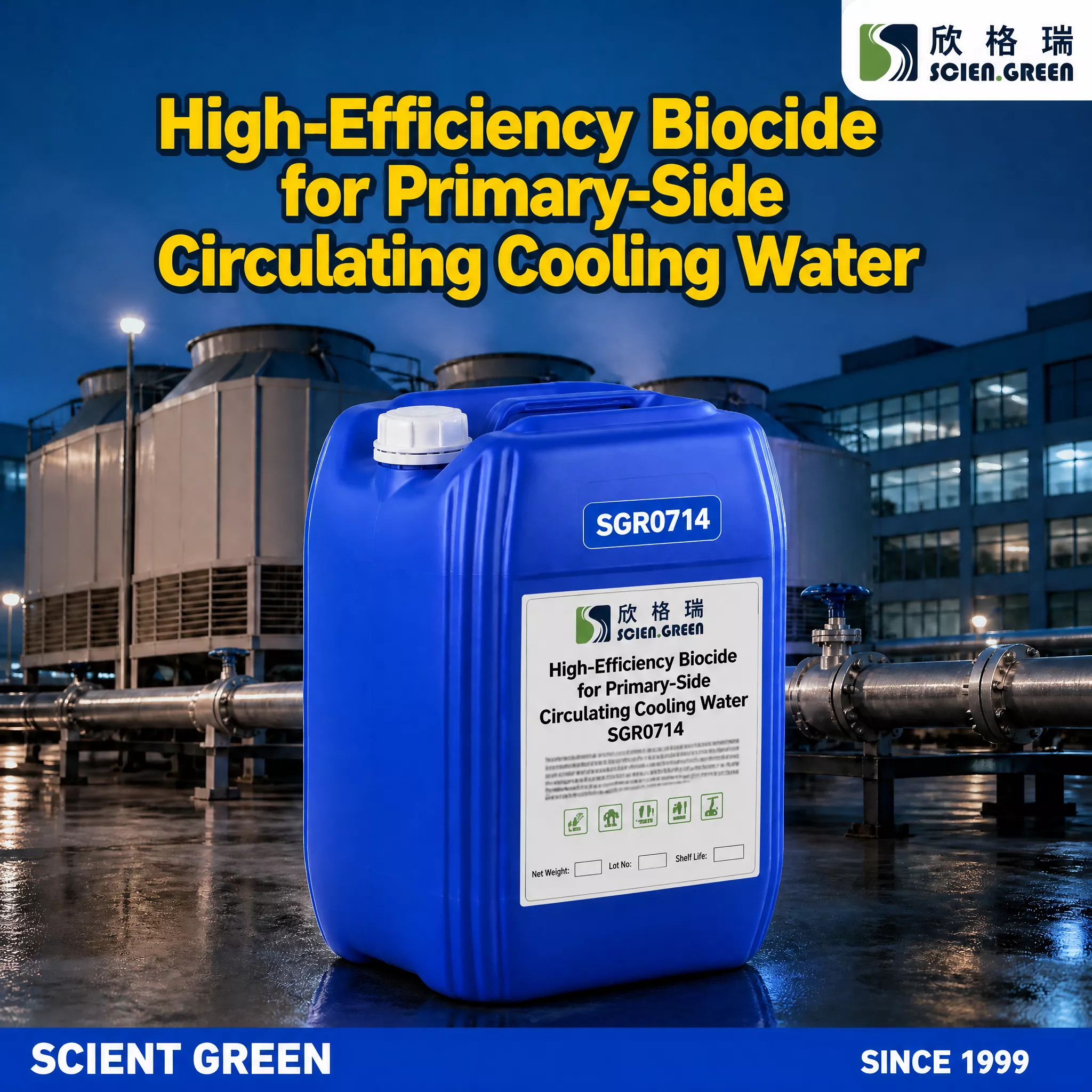
Product Name: High-Efficiency Biocide for Primary-Side Circulating Cooling Water
Model: SGR0714
Description: This product is a specialized non-oxidizing biocide designed for the primary-side open-loop circulating cooling systems of computing power centers (data centers). Formulated with a stabilized active antimicrobial system and proprietary stabilizing additives, it is engineered for the demanding conditions of open-loop liquid cooling systems—environments characterized by extensive contact with air, a high risk of microbial and algal blooms, the accumulation of biological slime, and potential water quality degradation. Leveraging a slow-release, stable formulation, it offers exceptional broad-spectrum biocidal, algaecidal, and slime-stripping capabilities.
Main Ingredients:
5-chloro-2-methyl-4-isothiazolin-3-one, 2-methyl-4-isothiazolin-3-one, and stabilizers.
Physical and Chemical Specifications:
Parameter | Specification |
Appearance | Transparent liquid (colorless, pale yellow, or pale blue-green) |
Density (20°C) g/cm³ | ≥ 1.03 |
pH Value (undiluted)
| 2.0 – 5.0
|
Performance:
① Optimized for Open-Loop Systems with Superior Stability: Featuring a specialized stabilizing formulation, the product effectively resists chemical degradation caused by aeration, temperature fluctuations, and variations in water quality—challenges typical of open-loop systems. Its active components remain effective for an extended period, ensuring long-lasting performance and significantly reducing the operational costs associated with frequent dosing.
② Non-Oxidizing, Gentle Biocidal Action: Utilizing a purely non-oxidizing mechanism, this biocide is non-aggressive and does not corrode common liquid cooling system metals, including carbon steel, stainless steel, copper, and aluminum alloys. It preserves the passive protective films on the surfaces of pipes, heat exchangers, and cold plates, thereby eliminating the risks of pitting corrosion and under-deposit corrosion. ③ Broad-spectrum bacteriostasis and algaecide; highly efficient at removing sludge and combating biofilms. Its highly active bacteriostatic components rapidly penetrate microbial cell walls, eliminating harmful bacteria and algae in the water. Simultaneously, it strips away stubborn biological slime from the surfaces of piping and heat-exchange equipment, addressing the root causes of biofouling, flow-path constriction, and reduced heat-exchange efficiency in open-loop systems.
④ Excellent compatibility and synergistic protection. It integrates seamlessly with corrosion and scale inhibitors—as well as water stabilizers—specifically designed for open-loop liquid cooling systems. There is no antagonism or loss of efficacy; it provides comprehensive, multi-layered protection, including corrosion inhibition, scale prevention, bacteriostasis, and water stabilization, establishing a complete water-quality protection framework for open-loop systems.
⑤ Long-lasting algae inhibition and prevention of regrowth. Unlike conventional biocides that offer only short-term sterilization, this product provides long-term inhibition of microbial and algal spore regeneration. It effectively prevents the recurring outbreaks of bacteria and algae often triggered by exposure to light and aeration in open-loop systems.
⑥ Eco-friendly with minimal residue; safe and environmentally responsible for operation and maintenance. It contains no heavy metals or toxic/hazardous additives. Its decomposition products are harmless, and it produces no irritating odors, ensuring a safe and convenient maintenance experience.
Applications: Specifically designed for the primary-side open-loop circulating cooling systems of liquid cooling infrastructure in computing and data centers. It is suitable for open-loop liquid cooling environments that involve cooling towers, open storage tanks, or direct exposure to air. It is widely used for primary-side liquid cooling units, Coolant Distribution Units (CDUs), circulation piping, and plate heat exchangers. It effectively resolves issues unique to open-loop systems—such as the proliferation of bacteria and algae, the formation of biological slime, water turbidity, and microbiologically influenced corrosion (MIC)—and is compatible with a wide range of standard circulating cooling water qualities.
Usage: Dosage is determined based on the total circulating water volume of the system. For long-term, routine bacteriostatic maintenance, a concentration of 300–500 mg/L (0.3–0.5 kg/m³) is recommended. The product can be applied via intermittent, scheduled dosing to consistently suppress the reproduction of microorganisms and algae, maintain the cleanliness of the coolant, and support the long-term, aerated operation of open-loop systems. During periods of high temperature, high humidity, or active microbial and algal proliferation—or in cases where the water becomes turbid or minor amounts of slime accumulate—employ a "shock dosing" (slug dosing) approach. Increase the dosage concentration to 500–1000 mg/L (0.5–1.0 kg/m³), and allow the system to circulate for 4–6 hours. This will thoroughly eliminate persistent microbial colonies and detach accumulated biological slime. Once the treatment is complete, perform a partial blowdown and replenish the system with fresh water, as dictated by the water quality conditions.
Packaging, Storage, and Transportation: Available in 25 kg, 200 kg, or 1000 kg plastic drums. Store in a cool, dry place.


